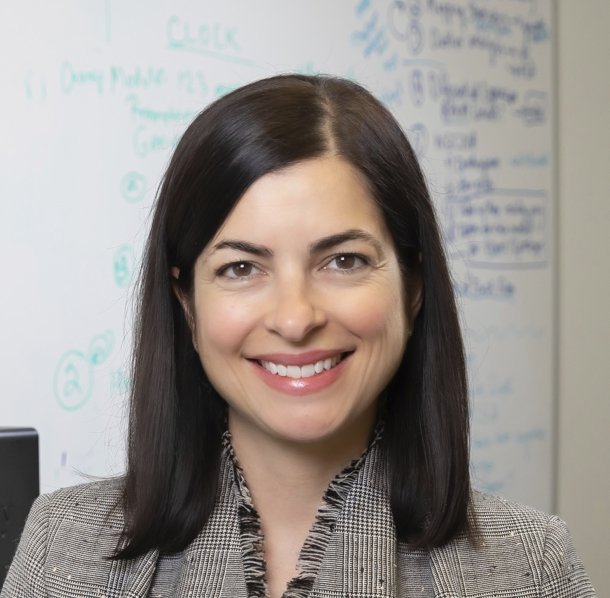
Meet our Researchers: Genevieve Konopka, PhD
Affiliation
Professor & Chair of Neurobiology, UCLA David Geffen School of Medicine
Research Focus
My lab investigates how gene function has evolved uniquely in the human brain to support advanced cognitive abilities. In line with this, we examine how these human-specific patterns of gene function and expression are altered in neuropsychiatric and cognitive disorders. We are particularly focused on understanding gene function at the level of individual cell types. Given that the human brain contains nearly 200 billion cells, a major challenge is to link genes to specific cell populations and, ultimately, to behavior.
Can you tell us about your research using donated postmortem brain tissue and why are these studies so important to advance autism research?
My research uses donated postmortem human brain tissue to investigate understudied regions of the brain, particularly white matter. Although neuroimaging studies like MRI have consistently implicated white matter in autism, the cellular and molecular mechanisms underlying these findings remain largely unexplored.
My lab isolates individual cells from these tissues and measures the expression of all the genes within each cell. We also measure the mechanisms that regulate the expression of the genes in each cell. For each piece of tissue, we can measure both gene expression and mechanism from over 10,000 cells. Then we compare these patterns across white matter regions and between tissues from donors with and without autism. These studies are essential to understand how specific genes, cells, and brain regions participate in the development and features of autism.
Studies using human brain tissue provide direct insight into the relationship between genes and brain function, insights that cannot be fully achieved through model systems.
What has been the most rewarding part of collaborating with Autism BrainNet so far?
Autism BrainNet is comprised of deeply compassionate individuals who are dedicated to advancing our understanding of autism. It is clear that they approach their work not simply as a profession, but as a vocation, with unwavering commitment to honoring and respecting donor families above all else. At the same time, Autism BrainNet brings together rigorous scientists who collaborate closely with investigators to design and carry out studies that maximizes the impact of the invaluable resource of postmortem brain tissues.
My lab and I are profoundly grateful to the families who choose to participate and donate tissue through Autism BrainNet. We recognize these donations as extraordinary gifts and treat them with the utmost care, respect, and responsibility.
How do you see the future of autism research, especially when it comes to postmortem brain studies?
Looking ahead, I anticipate that studies of gene expression in postmortem brain tissue will increasingly incorporate spatially resolved approaches that analyze larger, intact regions of tissue. Integrating spatial information will significantly enhance our understanding of how cellular organization may be disrupted in the brains of individuals with autism, including the potential mislocalization of specific cell types. Such cellular mislocalization has already been observed in animal models of autism. Demonstrating and characterizing similar patterns in human brain tissue will be an important step toward validating these findings and strengthening their relevance. Ultimately, this work will help inform and refine therapeutic strategies in model systems.